The framework
Both things are true.
Two seemingly opposed truths can be equally valid at the same time. Neither cancels the other out, and neither is a “yes, but” footnote to the other.
Not 50/50. Both 100%.
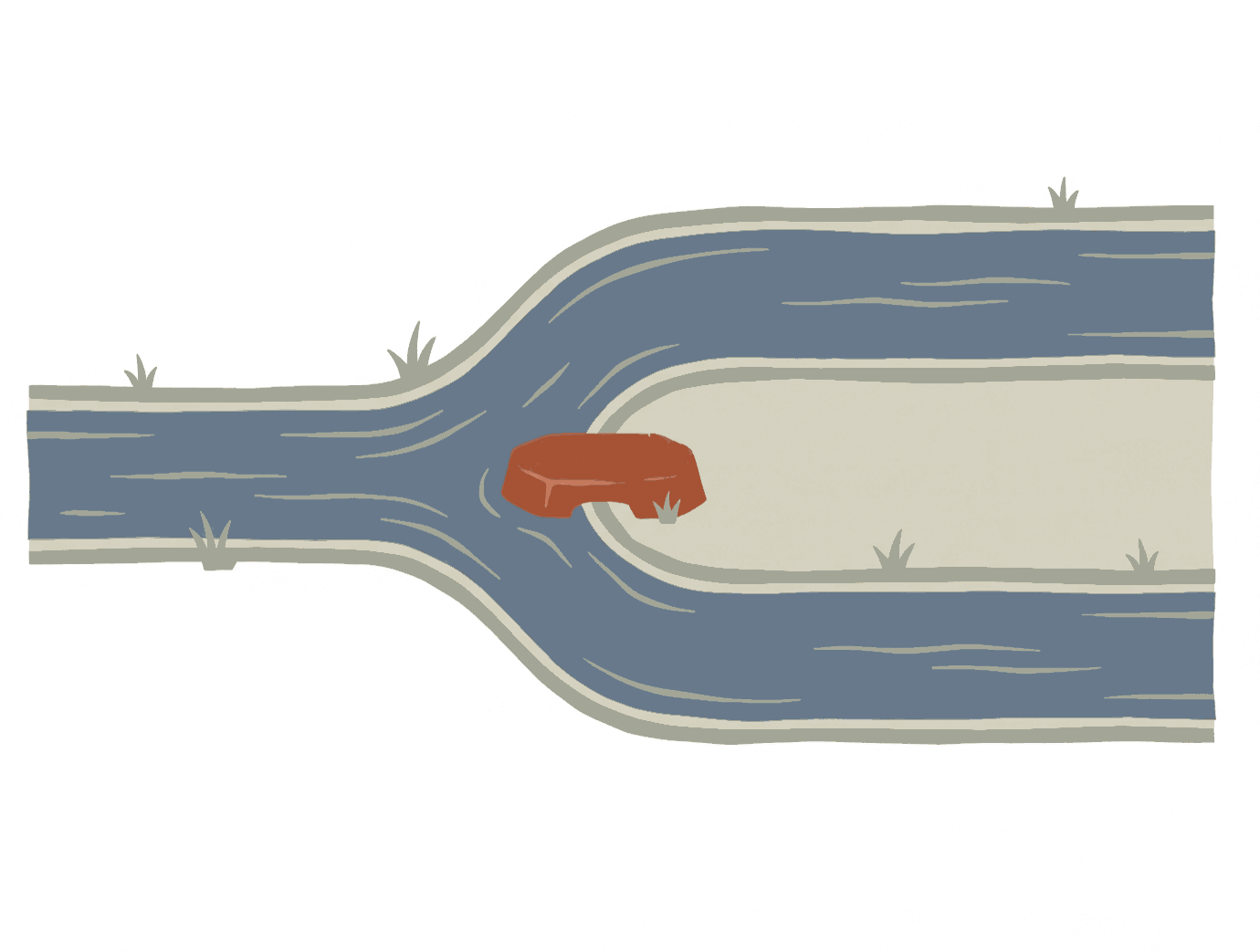
Dual Accountability is the operating framework behind Upstream, from Demetrius Wright’s LANDMINES: What Happened to Me. It governs how the product interprets what someone shares and how it responds — not just which topics it will cover.
It isn’t a feature and it isn’t a tone of voice. It’s a file, loaded into every conversation Upstream has, deliberately kept editable so the thinking can be corrected without touching code. The pairs below are the ones on this page because they’re the ones in that file.
The pairs
Seven you’ll meet more than once.
Your pain is real and valid
andyou are not powerless in the present
What happened to you explains the pattern
andit doesn’t excuse continuing it
You deserve compassion for how you got here
andyou’re the only one who can change what happens next
It makes complete sense why you did that
andit’s not working for you anymore
You were failed or hurt by someone
andyou still have agency in this moment
Your feelings are valid data
andthey are not always accurate instructions
You are allowed to grieve what you didn’t get
andyou can still build what you need now
In practice
Four rules for holding a pair open.
Never collapse the tension
Don’t resolve a pair into a single truth just to make someone feel better — or worse. Naming both and letting both stand is the actual work, not a step on the way to a tidier answer.
Watch for one-sided leaning
When someone leans entirely into what was done to them, the missing truth is their agency now. When they lean entirely into self-blame or pure bootstraps, the missing truth is what happened and how it shaped the pattern.
Catch the “yes, but” trap
“I know my childhood was rough, but that’s no excuse.” “I know it’s on me now, but nobody ever taught me otherwise.” One truth stated only so the other can dismiss it. Both things are true means neither gets erased.
Name the frame out loud
Saying “both things are true here” explicitly, rather than only implying it, helps a person hold the tension instead of resolving it early.
The move
What it sounds like in a conversation.
“It sounds like two things are true here: ___ and ___. Does that feel right?”
Then the harder half of the move: asking which of the two you find easier to sit with, and gently inviting you toward the one you’re avoiding.
And when you ask “which one is it, though?” — the honest answer is usually both, and here’s what that means for what you do next, rather than picking a side to make the conversation end sooner.

Upstream carries the pairs you’ve named into later conversations, so the same tension doesn’t have to be discovered from scratch every time.
Guardrails
Three things it is not.
It isn’t a way to soften a real challenge
Holding two truths is not the same as refusing to take a clear stance when directness is what’s called for.
It isn’t false balance
Dual Accountability holds personal agency and external circumstance as both real — not as morally equivalent. Someone’s suffering at another’s hands and their own next choice are different categories of truth, held together, never weighed against each other.
It isn’t a way to excuse harm
The framework is about a person’s relationship to their own decisions. It is not a tool for excusing harm they’ve done to others, nor for minimising harm done to them.
Reading it is one thing. Using it on something real is another.
If you’re coming home from a sentence, there’s a page on how this framework applies when the stakes are highest. Coming home.